Rhythm
This week in interior design we learned about rhythm. Rhythm uses pattern to create unity and interest in a design. It is created when certain colors, lines, forms or textures are used in a consistent pattern. Here are a few examples of 3 different kinds of rhythm.
Repetition
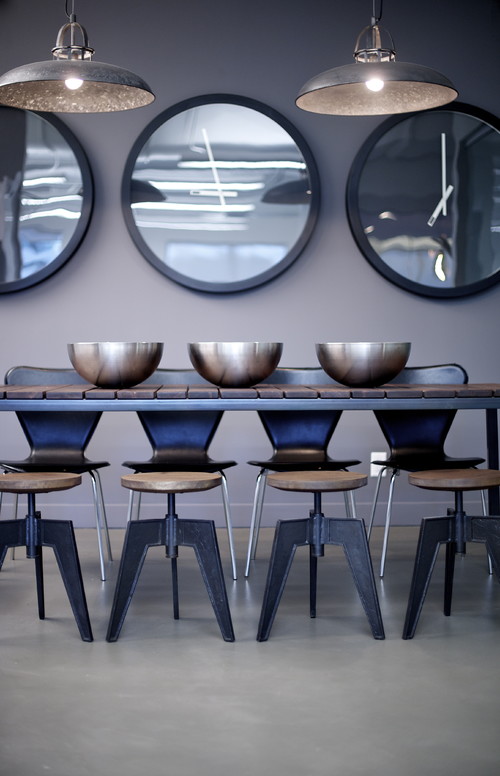
achieved by repeating any of the elements of design line, color, texture and pattern, light, and scale and proportion or other design concepts in an organized and regular way. In the first picture, repetition is used in the chairs, bowls, mirrors, and the lights. It continues to have the same objects in a uniformed row. In the second picture, repetition is used with the pillars and lights on the floor. There are multiple of each and continue all the way down the hallway.

Radiation
This rhythm is closely related to radial balance. This type can give a room a circular radial feeling and are arrayed around a center point. In the first picture, radiation is used with the way the chairs are around the table, the circular light bulbs on the light fixture, and the table. This is because the table almost serves as a main center point and the rest of the pieces revolve around that. The second picture is radiation because of the mirror, the light, the footrest, and some of the decor. In this one there isn't a specific center point but things nearby present the radial presence.


Gradation
Gradation is the use of a change in size of objects from large to small or a change in color from light to dark . Gradation is by far the most simplest of rhythms. In the first picture, gradation is present because of how the top shelf is leading your eye down with the shelves getting shorter and shorter one after the other. The second picture is also gradation because of how many holes there are in the wall for the wine bottles to be stored in. On the left there are many more holes than on the right which makes it lead your eye from left to right gradually going down.


No comments:
Post a Comment